Introducing
Arkansauce
Introducing
Arkansauce
Arkansauce’s sixth album, Horizon Never Dies, started with a change of scenery. After five albums cut close to home in Fayetteville, the band packed up and headed to Southern Ground studio in Nashville. It was a chance to add some depth and experimentation to the sound without losing the thread of what makes Arkansauce who they are, and to soak up a city built around hook-driven songwriting while they were at it.
Twelve songs came out of it. Marriages were solidified. Kids were born. A friend was lost. The road kept unspooling in front of the band the whole time, and Horizon Never Dies is what happens when a band that’s spent most of its adult life in a van finally sits down and reckons with all of it.
The title track is the record’s center of gravity, and it almost didn’t happen. A friend of the band’s, about a thousand miles into hiking the Pacific Crest Trail, spent weeks with no phone signal and nothing but time, filling notebooks with fragments she eventually handed over.
“She sent me a handful of ideas that were very meaningful to her journey, and I set forth crafting ‘Horizon Never Dies,’” mandolinist Ethan Bush says. “It ended up taking years for this song to find its way to the studio. The time served it well.” “The horizon never dies / it don’t fade / like the strength that pulls me through another day,” the song goes on, tired and stubborn at the same time, which is about right.
“Rearview” runs the same road in a different direction, a night-drive escape west toward Colorado with the problems shrinking in the mirror— “they’re getting smaller in the rearview mirror / I got some problems, I just left them there.” “Weather” digs into the same idea from the inside out, less about the miles and more about the ruts.
“How much of our subconscious is driving the bus, steering us into our preferences and away from our fears?” bassist Tom Andersen asks. “Is free will an illusion that we sell ourselves to feel control over our lives? Maybe we can change our weather.”
“Arch Rival” is where that reckoning gets personal. It was written the day one of the band members found out he was going to be a father, standing near the ocean before a show in Virginia Beach.
“I woke up the next day and the melody came to me as I was picking by the ocean,” banjoist Adams Collins says. “I spent the next several weeks reflecting on what my life had been and where it was going. It’s a crossroads song about letting go of the past and moving into the next stage of life with confidence.” “Know that you’ve already won the race / the only opponent is you,” the chorus decides.
Fatherhood turns up again on “Bad Italian,” a love song for a wife written a few weeks after a babymoon trip through Italy, sung in the band’s best (and worst, on purpose) attempt at Italian pronunciation. It’s a playful pause on a record that’s otherwise pretty serious about time and change, and it works well next to “Soda Pop,” a song about the reckless early days of falling in love that nearly stayed buried in an old notebook for good.
“It was almost lost, destined to remain trapped in a notebook until my wife reminded me of it during a car ride out to watch a solar eclipse,” Bush says. “When we arrived home, we spruced it up, and it injected a fun little bit of risqué funk into the project.”
There’s still plenty of the instrumental interplay Arkansauce built its name on. “Escape from Morgan Mountain” came out of long stretches of practicing banjo along with Afrobeat records, chasing the same locked-in, trance-like grooves with bluegrass instruments instead. “Flying Goose Feathers in Three Quarter Time” traces back to a Del McCoury Band street show at Fayetteville Roots Festival. “Katydid” is quieter and more traditional, a nod to the insects that used to sing Bush to sleep on porches growing up in Arkansas.
“More traditional bluegrass songs can be tough for me lyrically at times,” Bush says. “It’s not always easy to come up with a subject that feels honest to my experience and hasn’t been overdone. I found one in ‘Katydid,’ and it was very fulfilling to breathe life into it in the studio.”
Then there’s “Lift Your Voice,” written while the band sat stranded in standstill traffic during a New Mexico snowstorm in the company of a canceled gig and a dwindling fuel gauge.
“I was in the back noodling on the mandolin and started uncovering the first notes of what would become the melody,” Bush says. “It became a celebration of what it is to be a musician and make a difference in your fans’ lives through live performance. That song fashioned itself for a festival crowd, and we can’t wait to unleash it on one.”
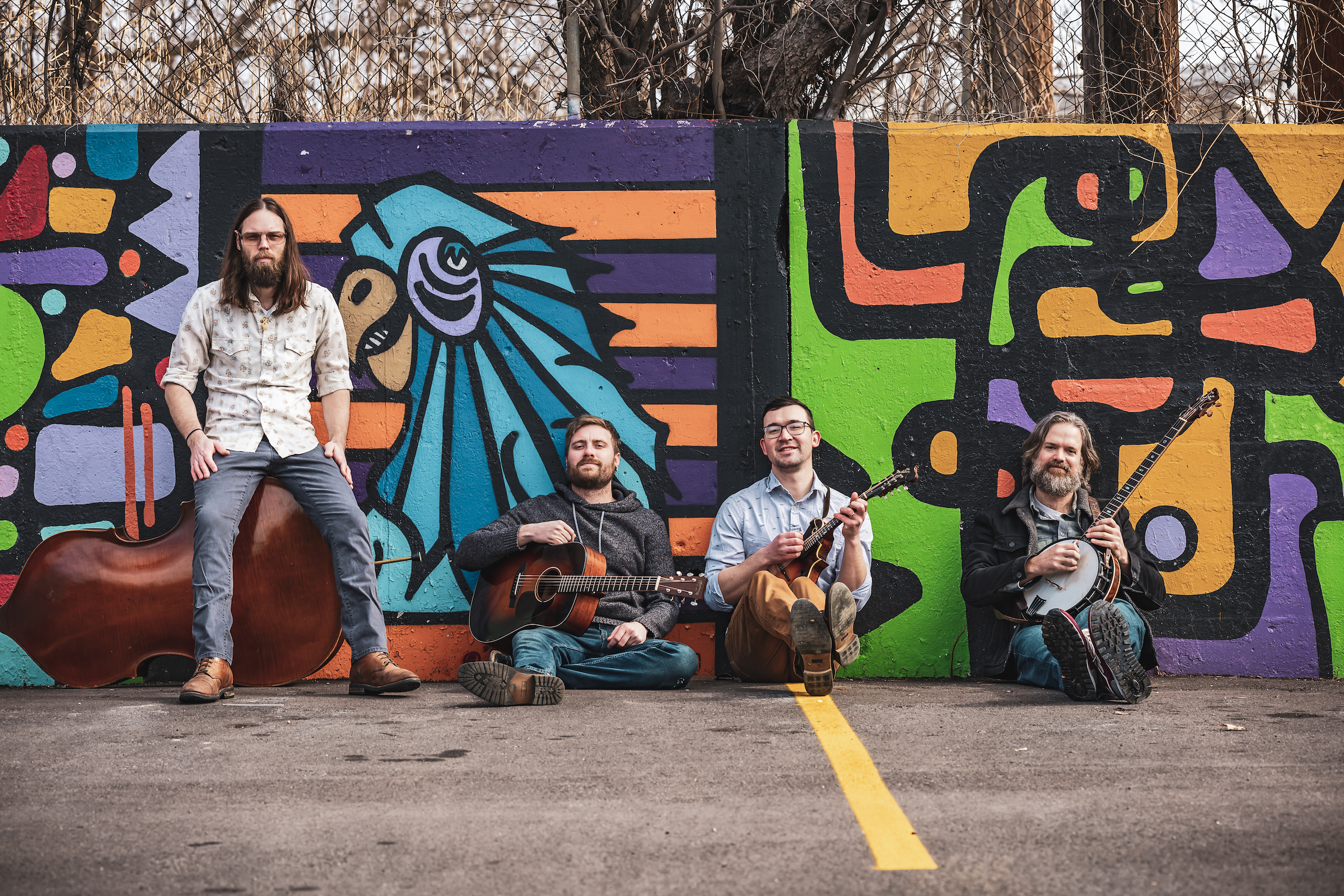
Produced by Dan Davis alongside the band, Horizon Never Dies also pulls in a deep bench of Nashville talent including fiddler John Mailander, drummer and percussionist Jesus Agreda, and accordionist Robert Ledet all show up across the record, as well as Asheville resonator guitarist Tommy Maher, adding texture without ever crowding out the core four: Ethan Bush on mandolin, Zac Archuleta on guitar, Adams Collins on banjo, and Tom Andersen on bass, the same lineup that’s carried Arkansauce since its earliest days playing bars around Fayetteville.
Thirteen years and six albums in, Arkansauce is still doing what it’s always done: watching the road behind them shrink in the mirror, and still curious enough to find out what’s around the next bend.
Contact



Copyright © 2026 Arkansauce, LLC.All Rights Reserved.
Website by Kevin Mulcrone